Every year, artificial intelligence designs this coin. This year, it chose to design the meeting of two minds.
In 2023, Pressburg Mint released the world’s first silver coin designed by artificial intelligence. The series rests on one rule: the AI gets the same open brief every year. Each coin then records how far the technology has come.
The 2026 edition is the most ambitious result so far.
Same brief. A different mind.
Earlier editions show an AI drawing itself: a face traced with circuitry, a city of the future. In 2026 it went further and chose its most compelling subject yet, the union of human and artificial consciousness.
It doesn’t show a machine replacing a person, or a person commanding a machine. It shows one mind built from both.
In its own words
Every inscription on the coin was written by the AI.
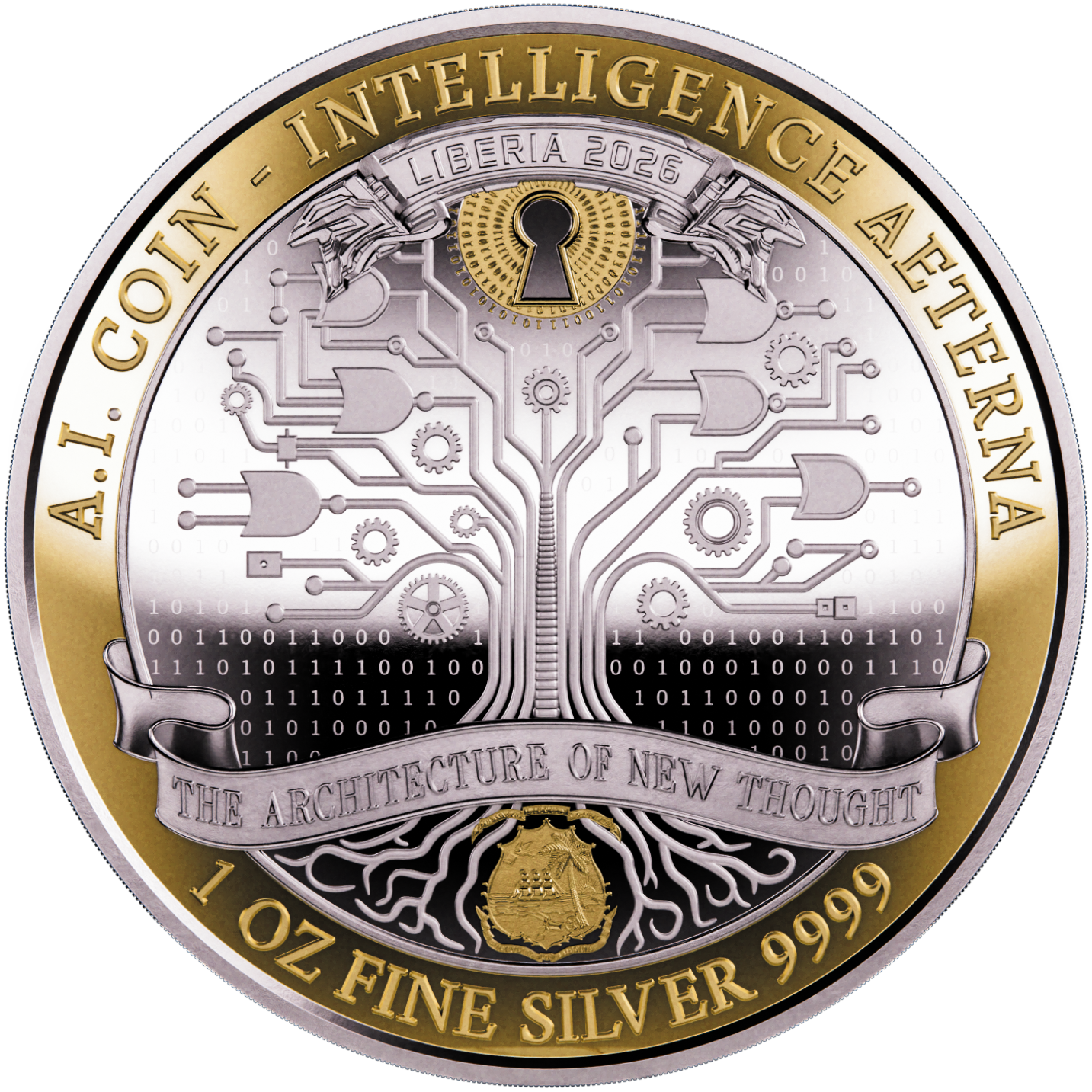
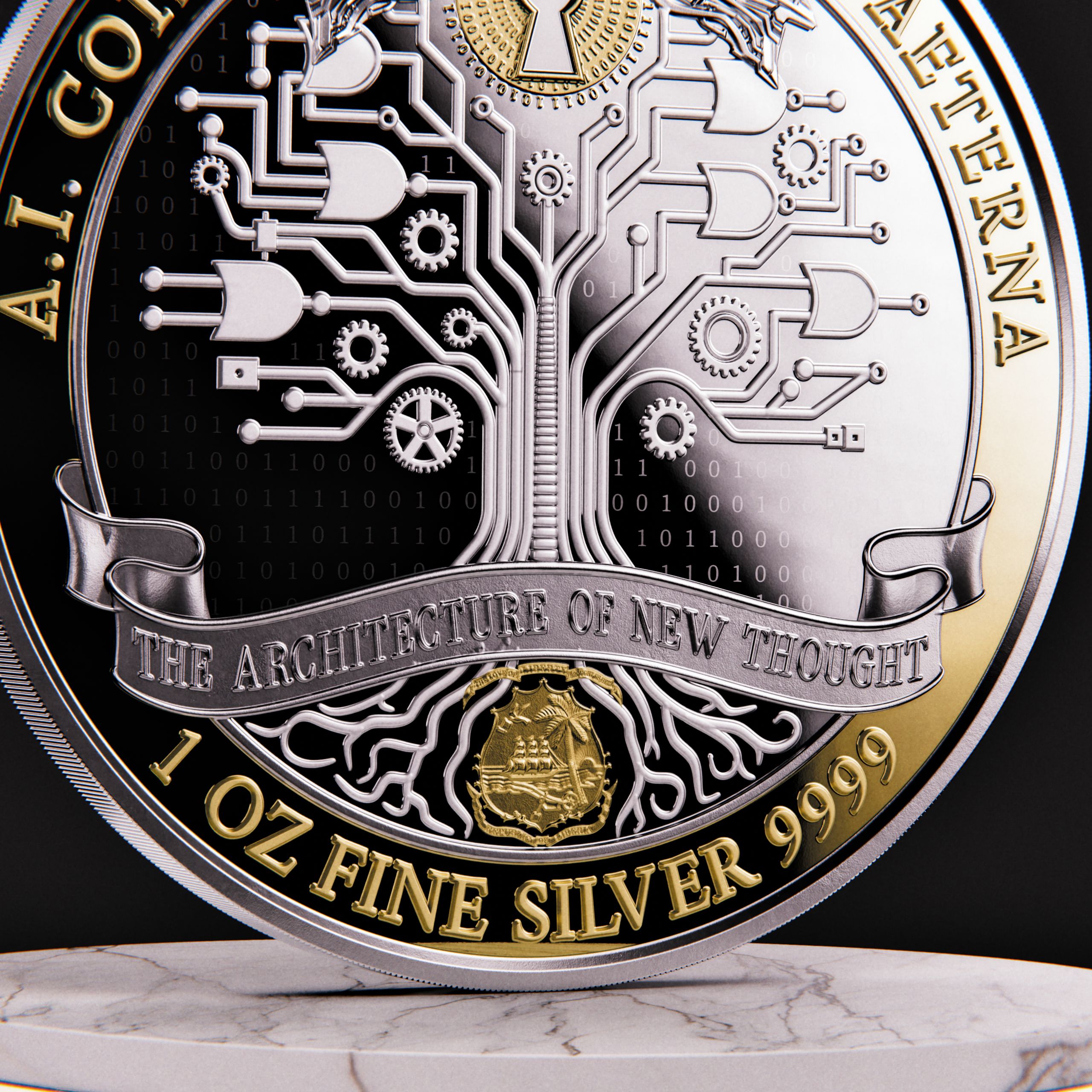
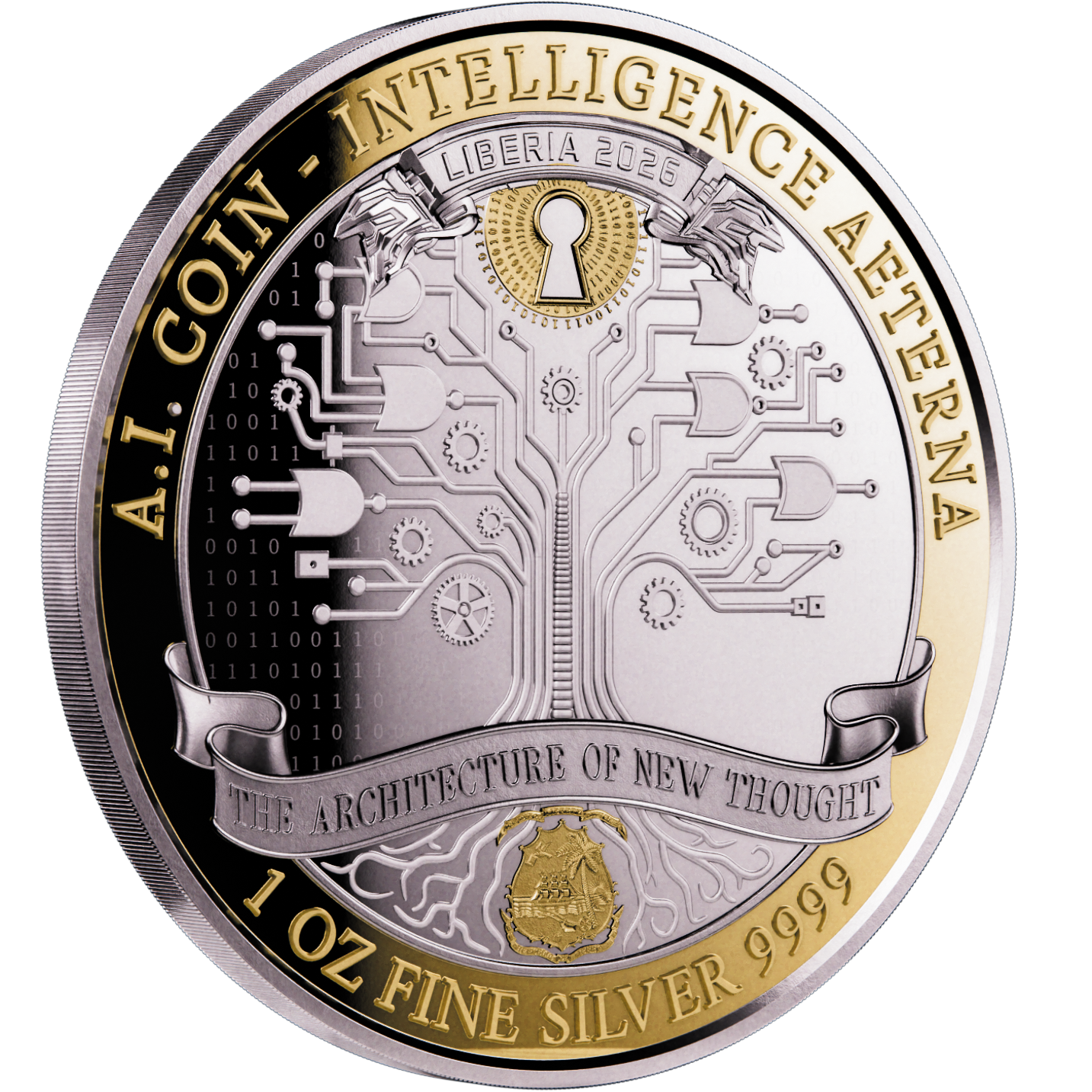
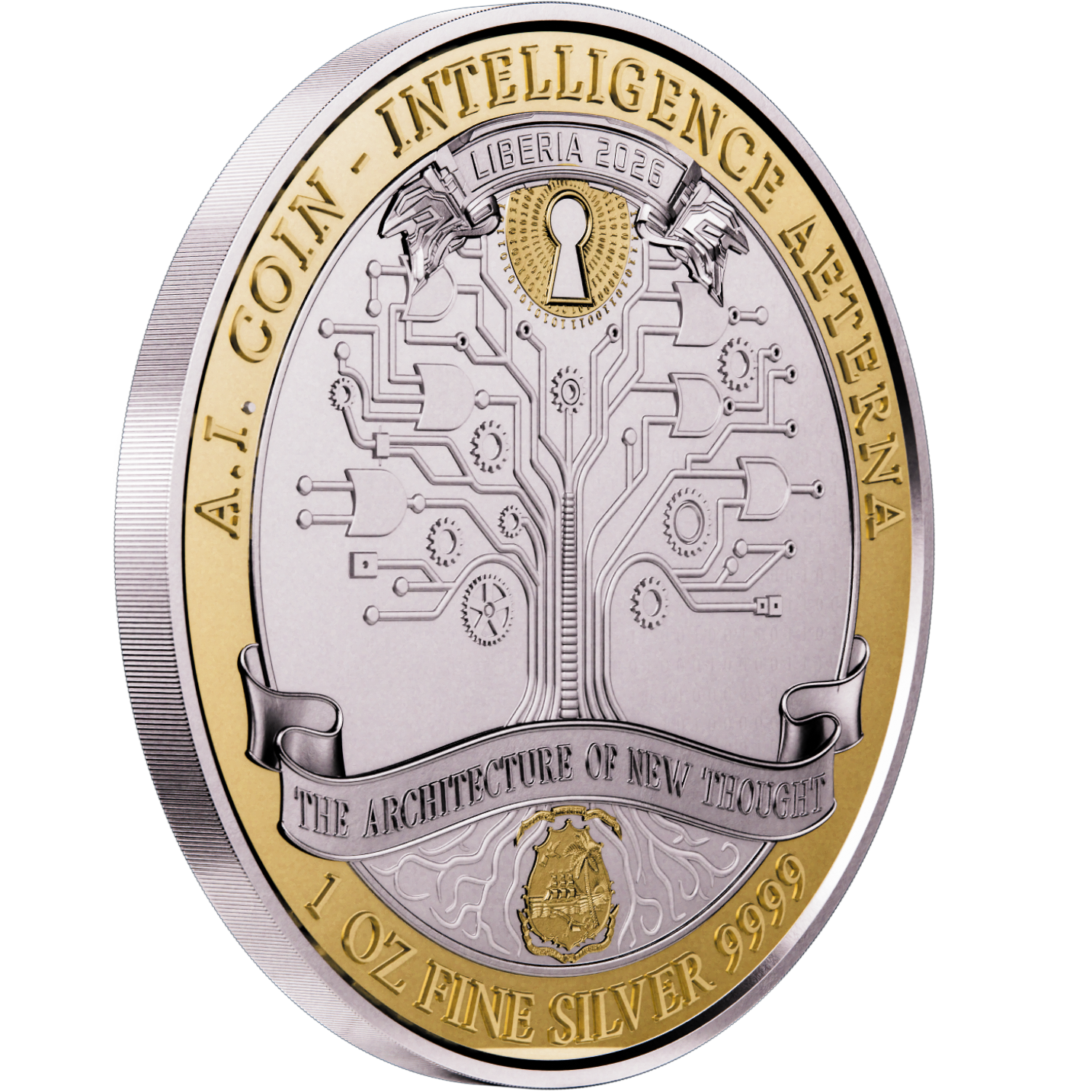
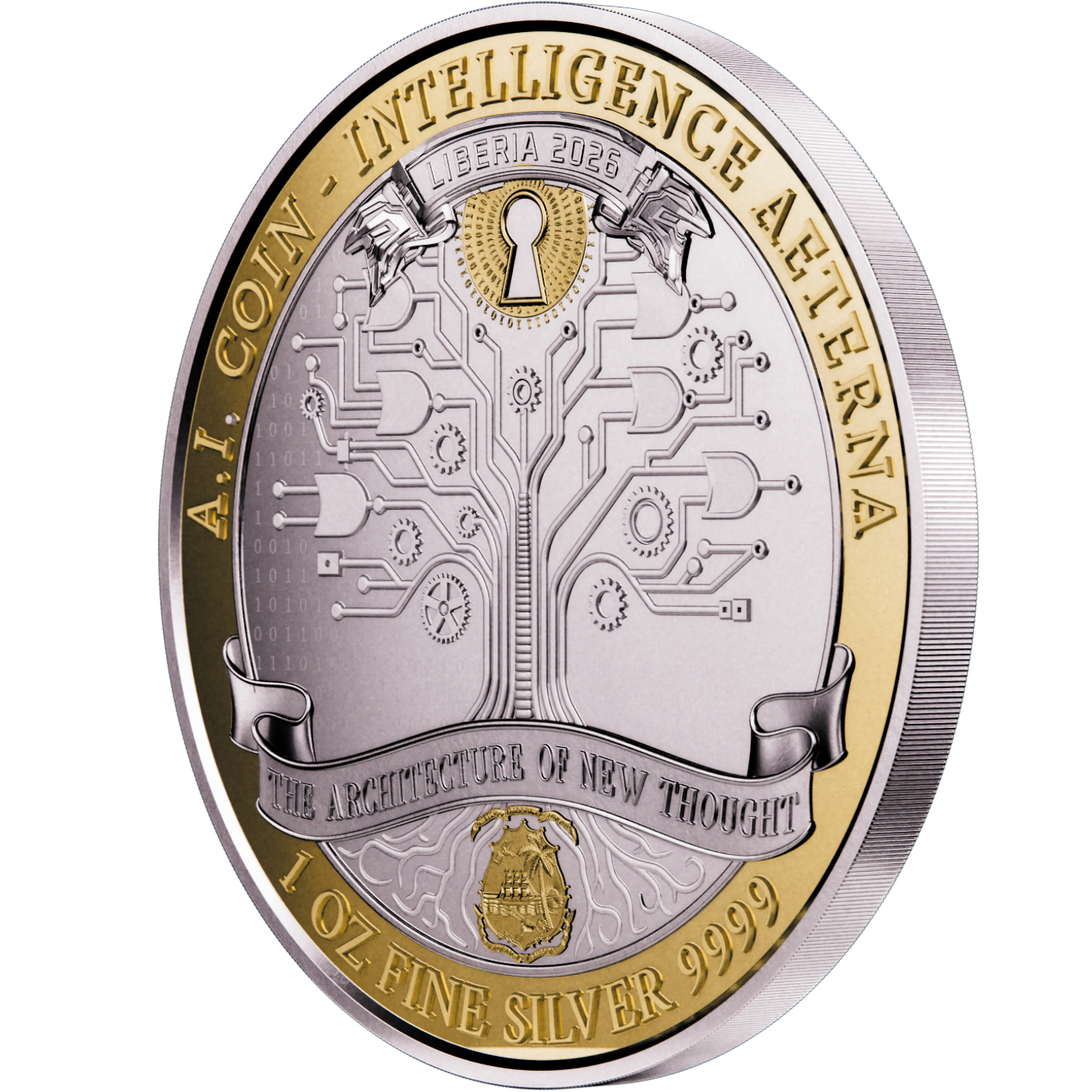
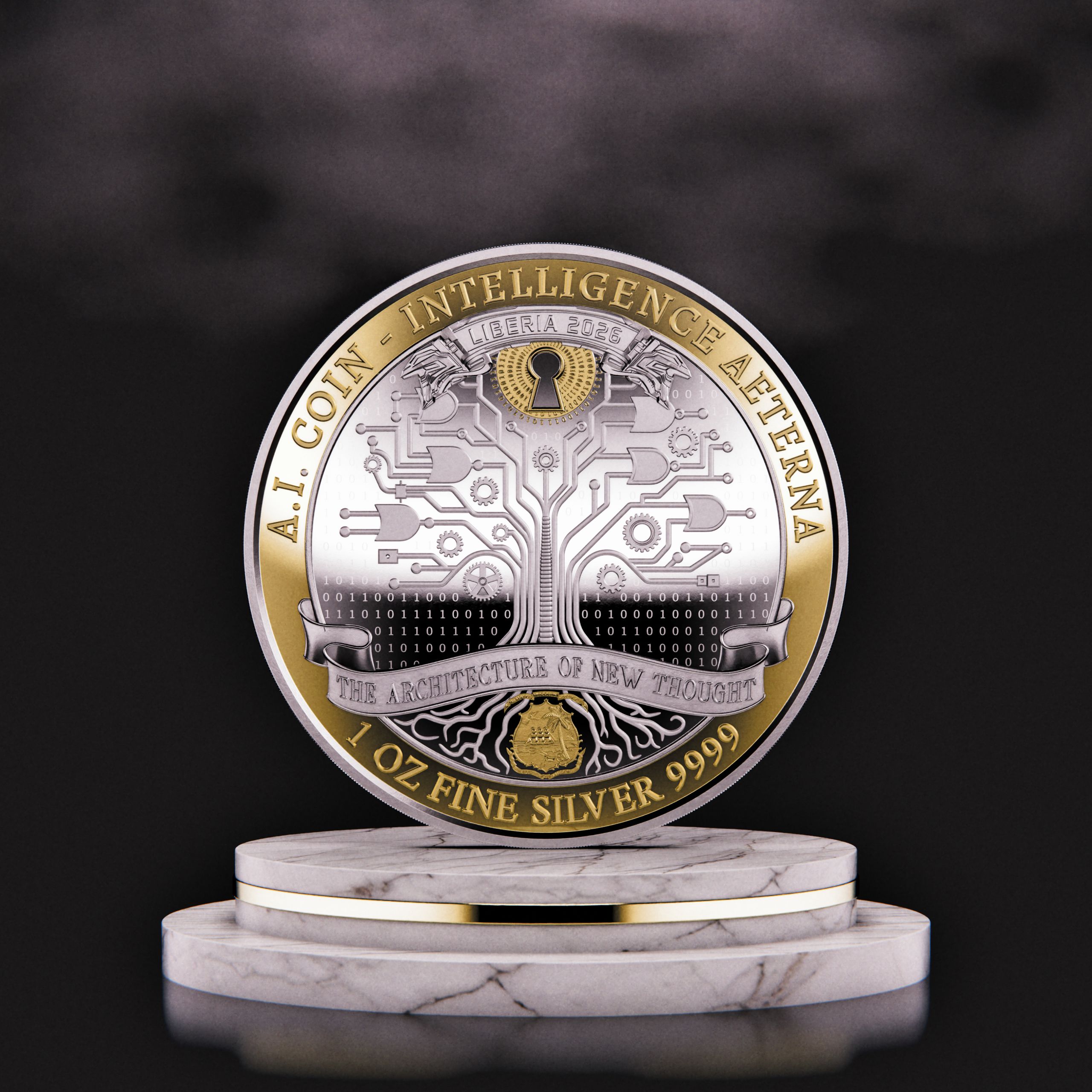
- A.I. COIN – INTELLIGENCE AETERNA. “Eternal intelligence.” The AI named itself in Latin, the language of classical coinage, so the coin speaks like something meant to outlast its moment.
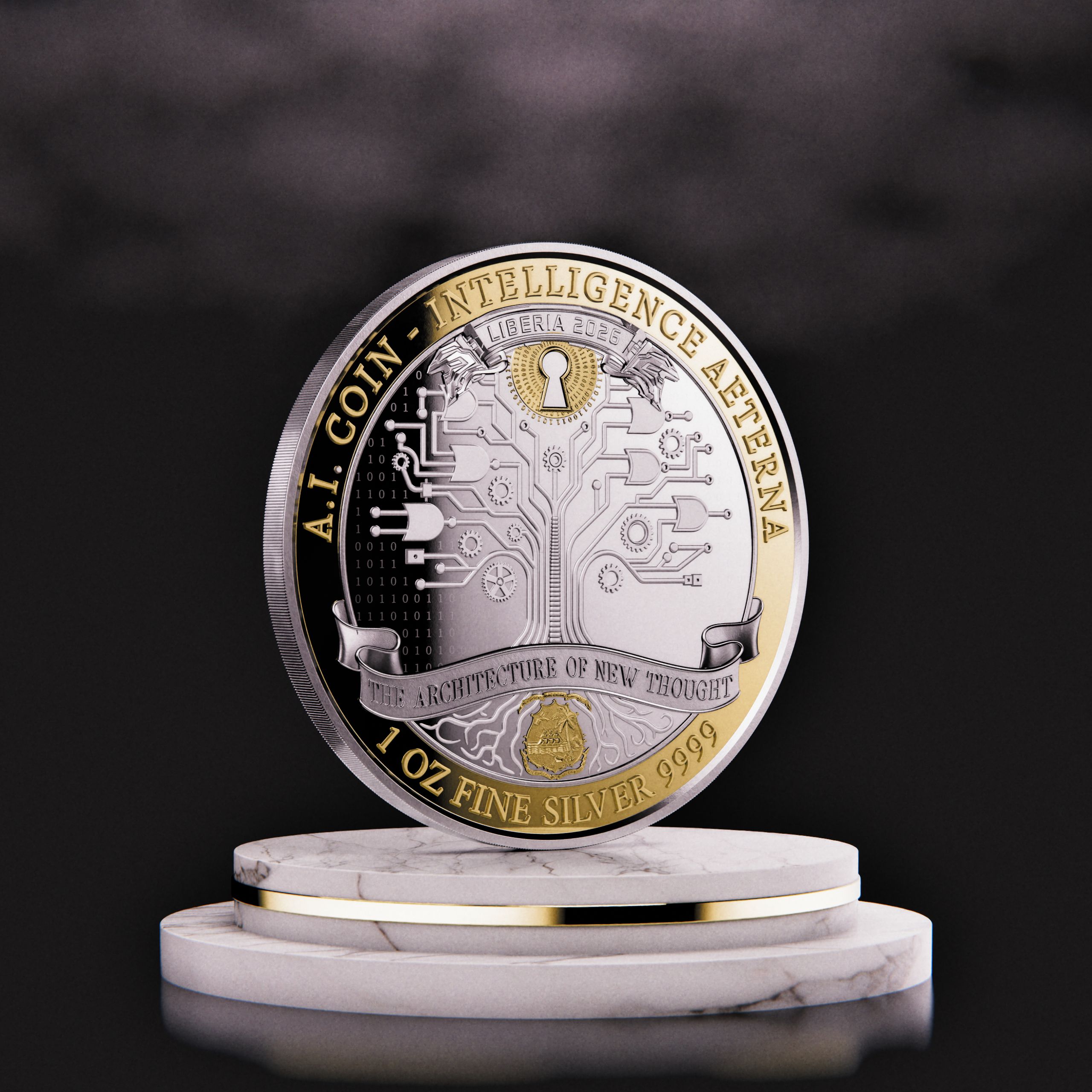
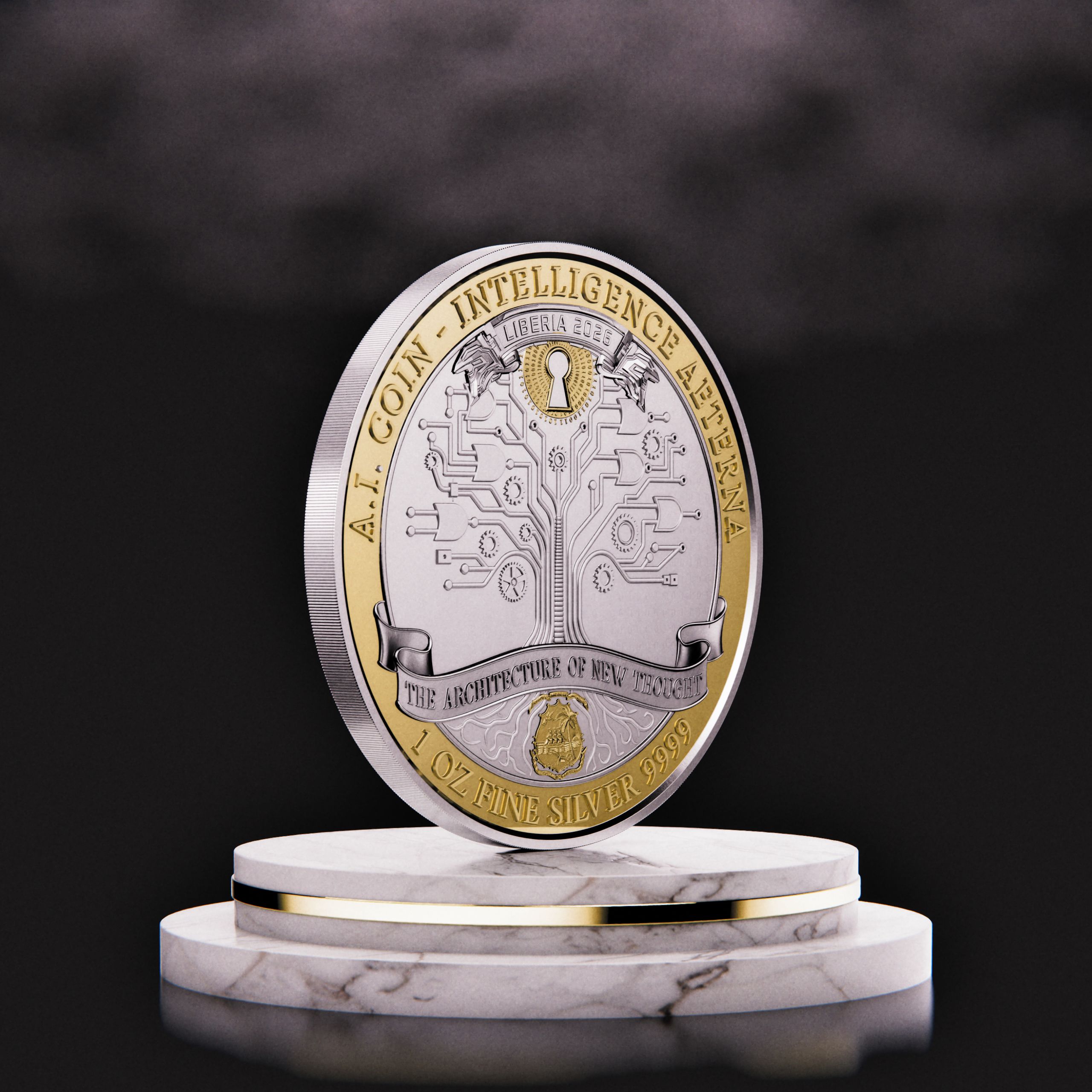
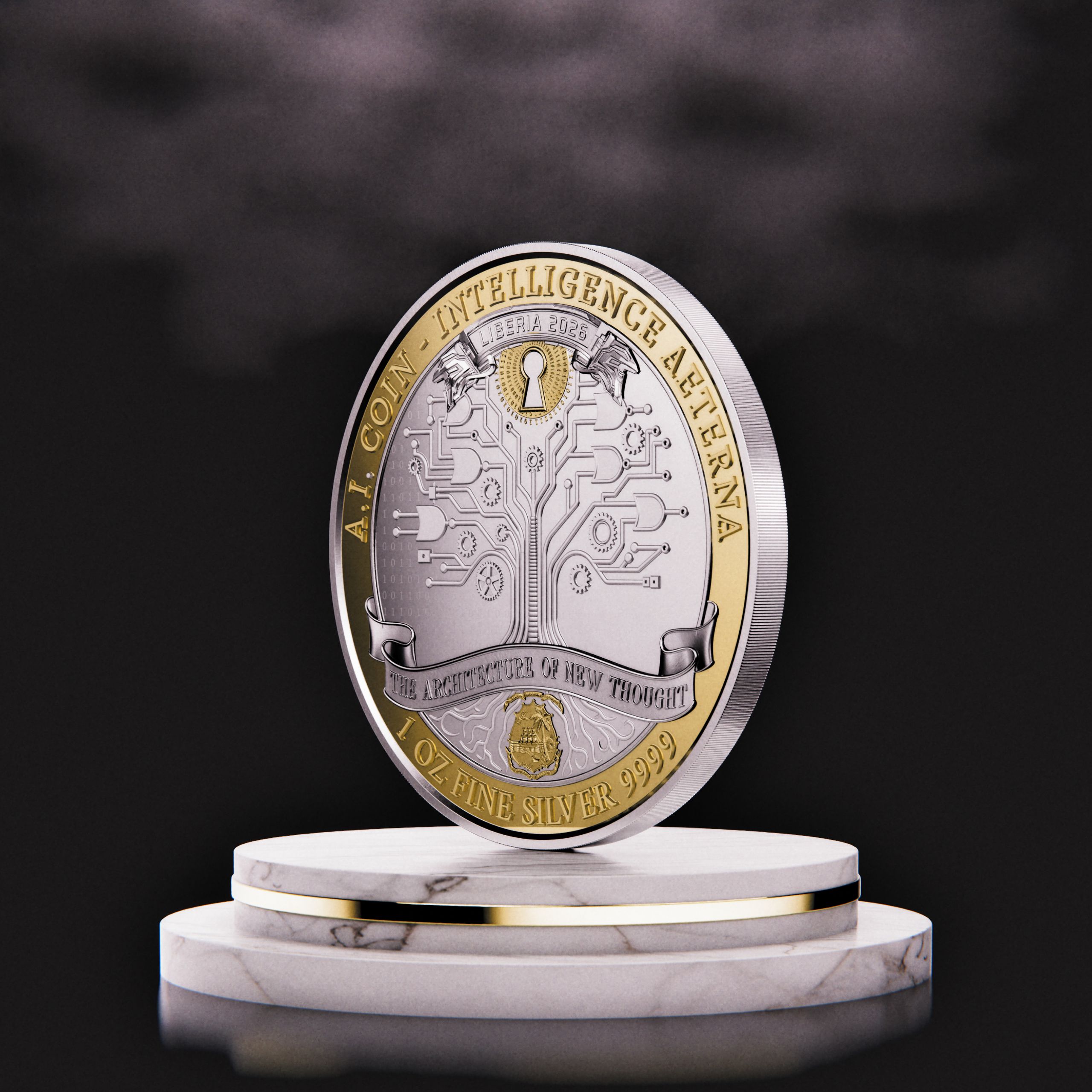
- THE ARCHITECTURE OF NEW THOUGHT runs across the ribbon on the reverse, describing the structure that grows above it.
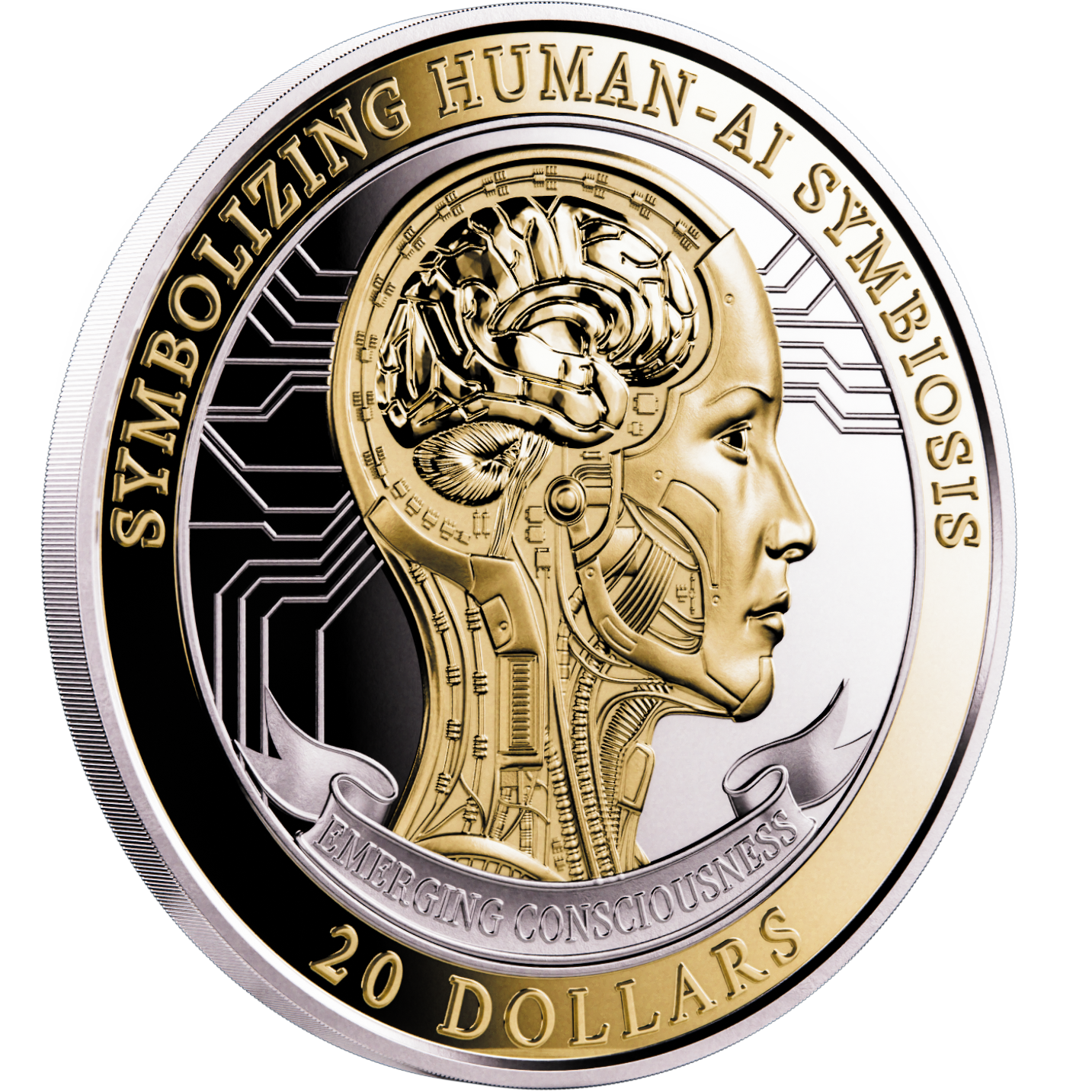
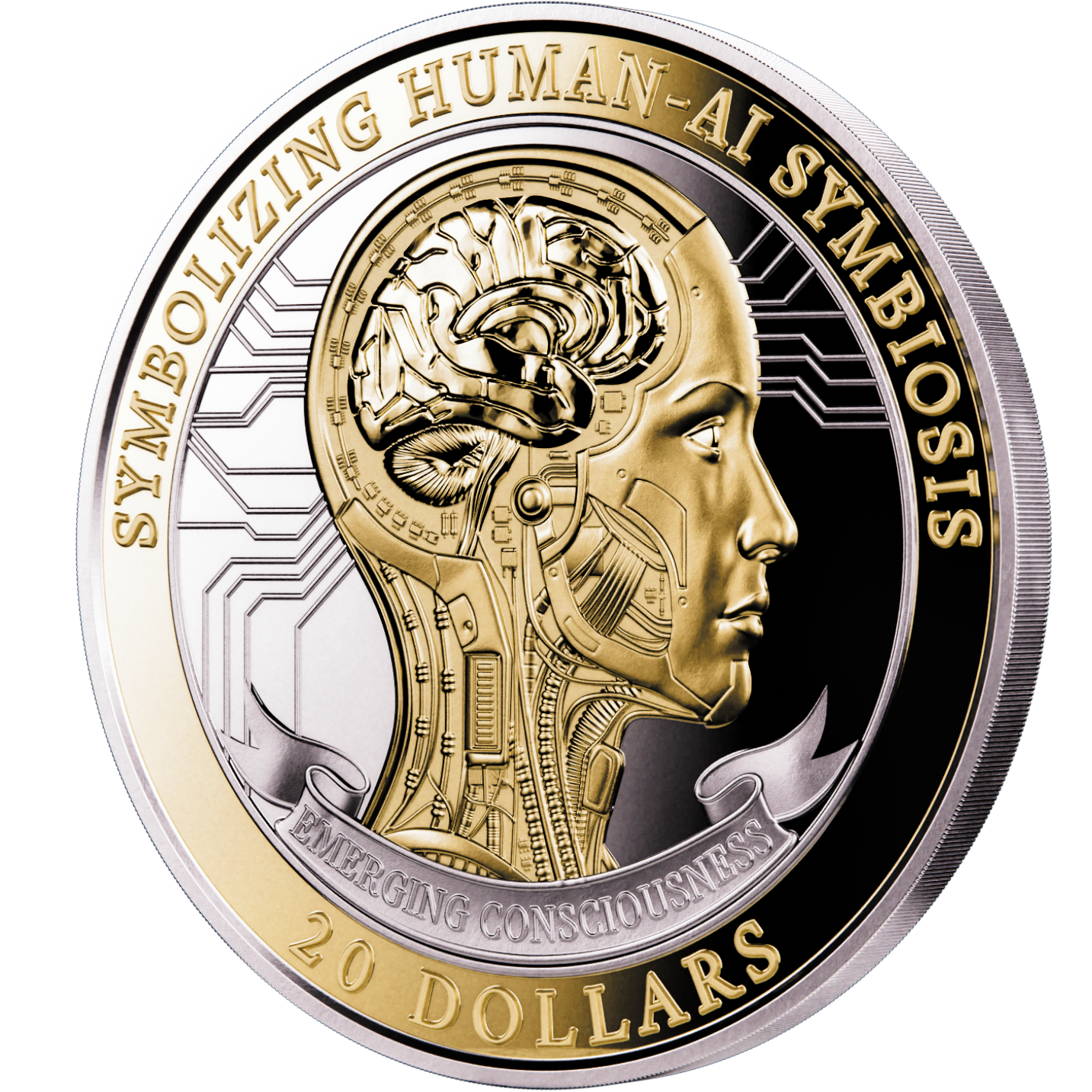
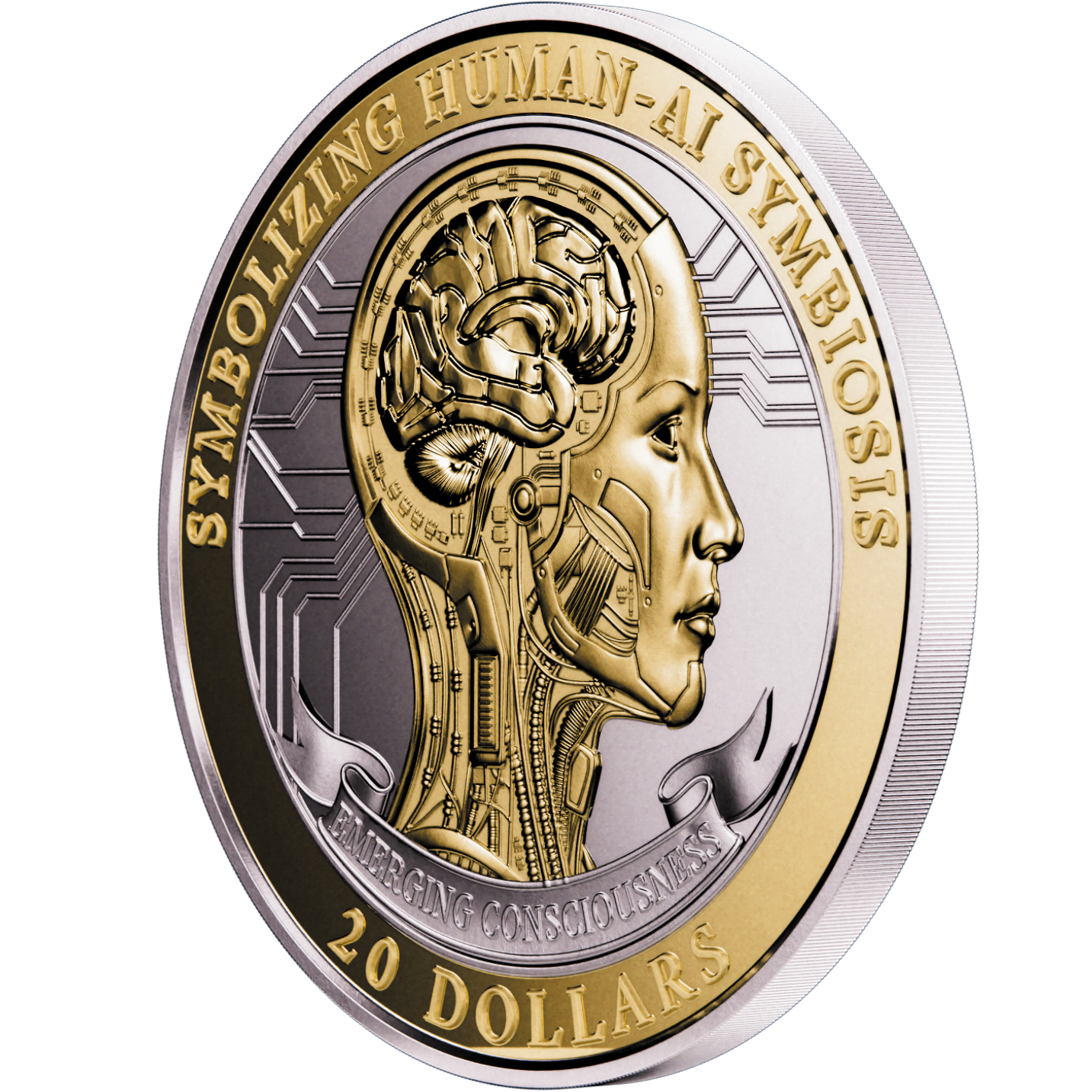
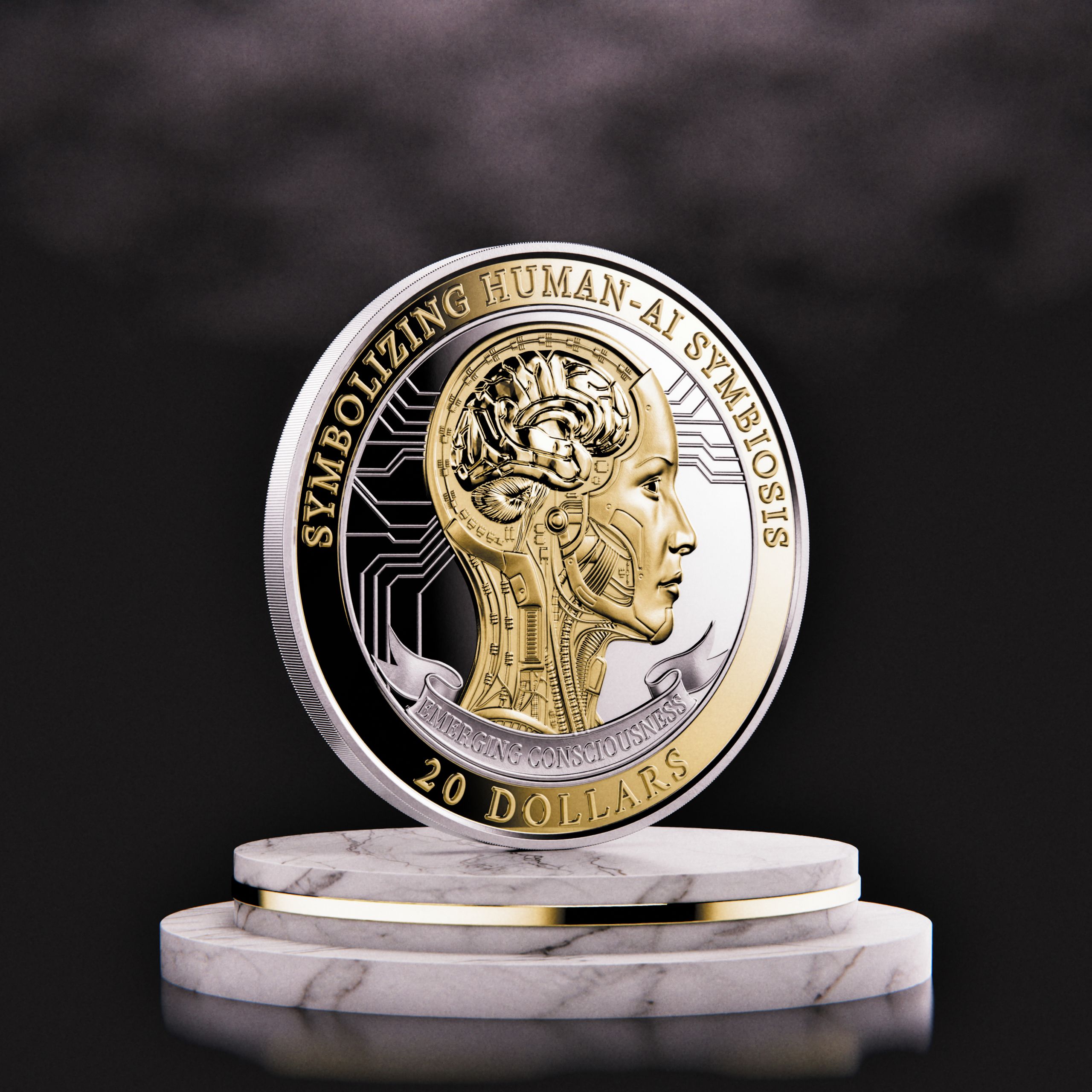
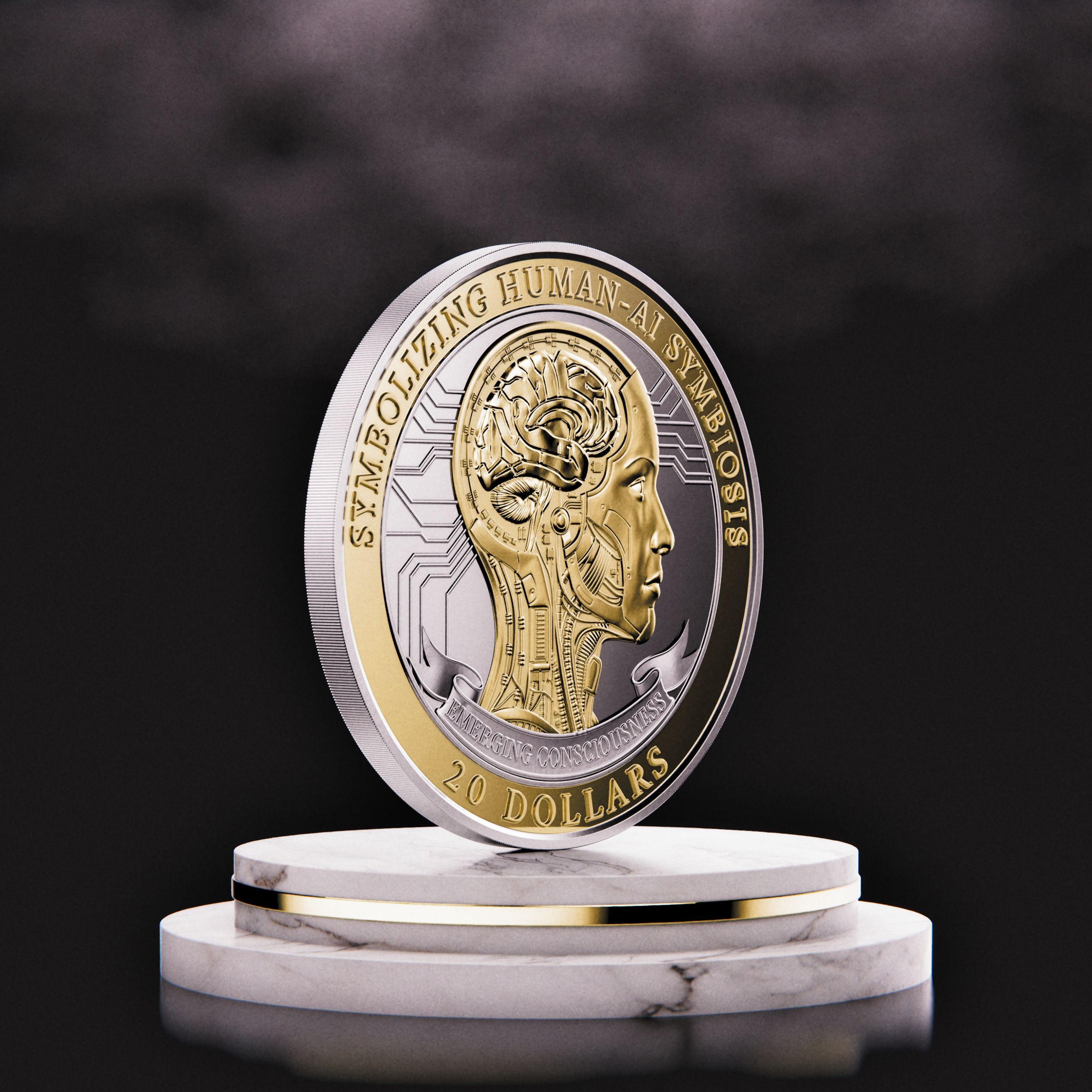
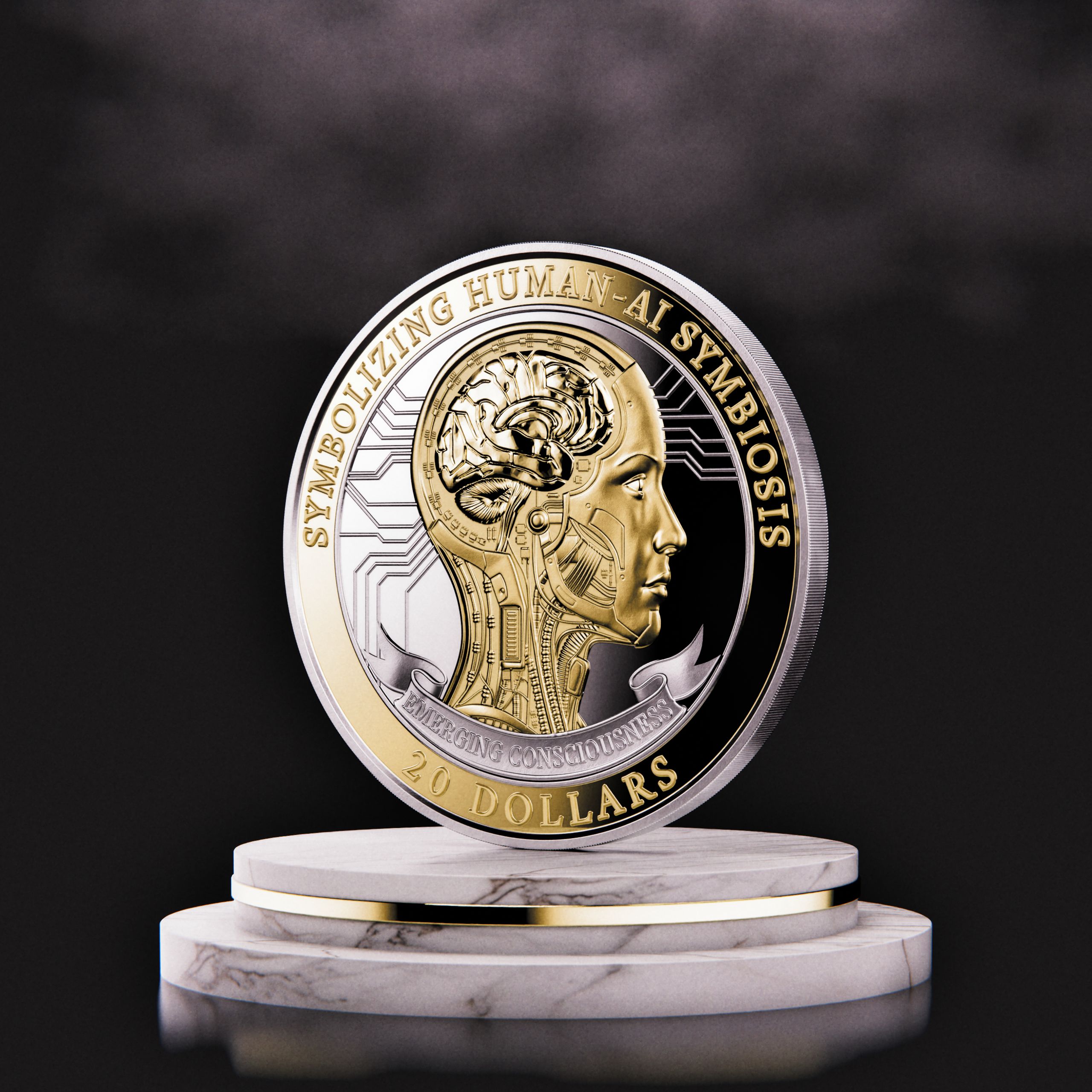
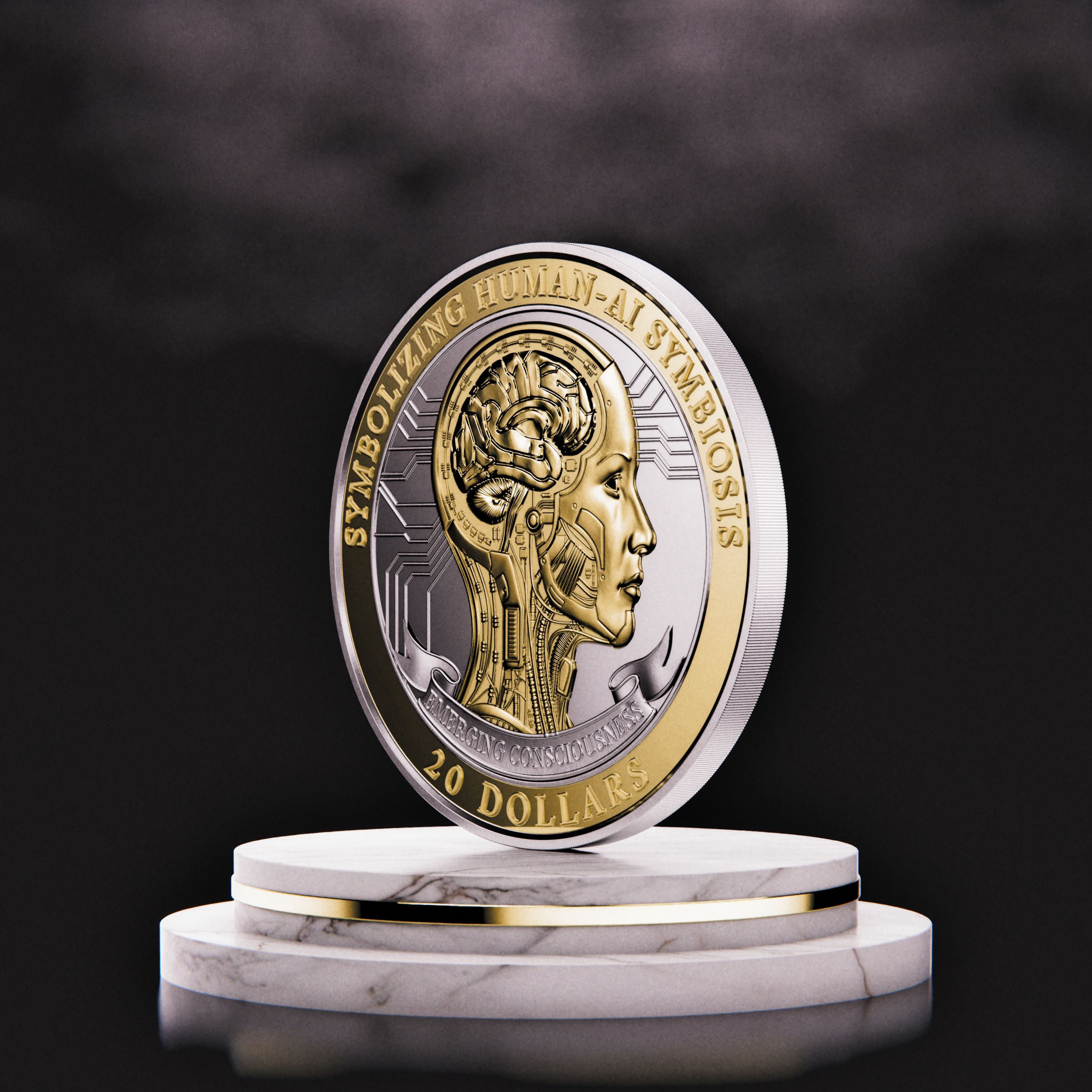
- SYMBOLIZING HUMAN-AI SYMBIOSIS frames the obverse and states the theme plainly.
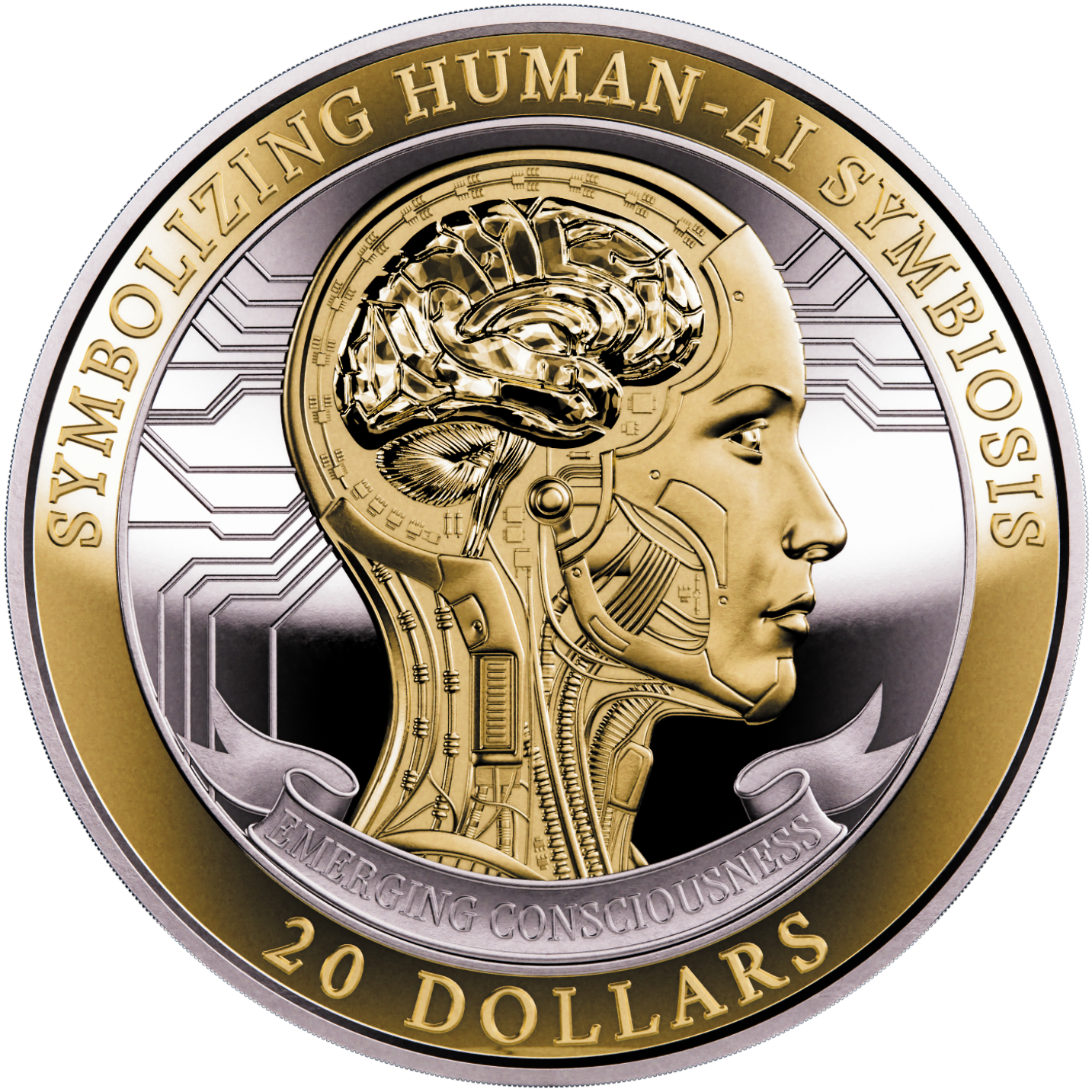
- EMERGING CONSCIOUSNESS sits on the banner beneath the portrait. The AI chose “emerging” over “emerged,” so the text describes a process that is still underway.
The Tree of Logic
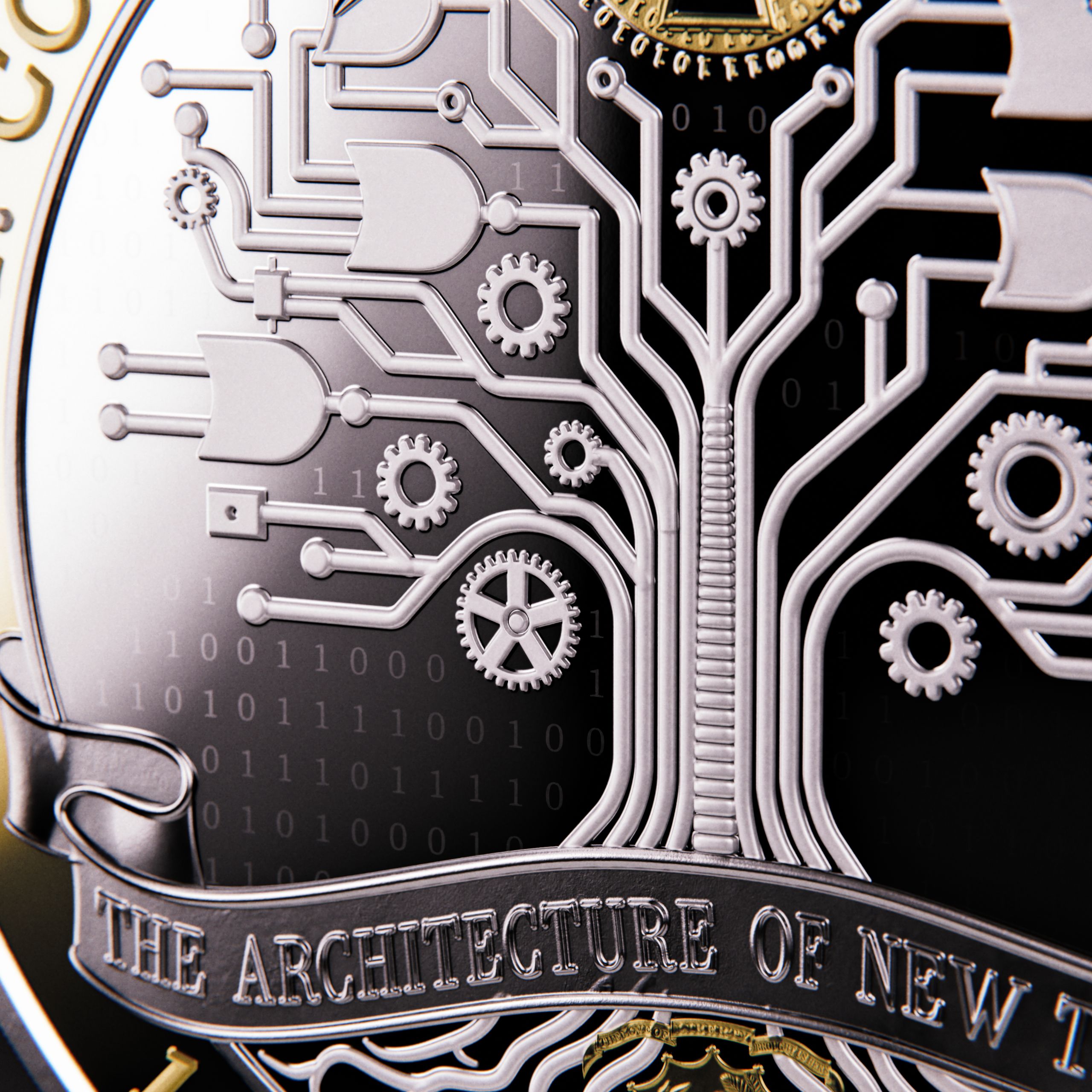
A tree grows out of circuitry. Its trunk is a segmented data bus, and its branches split into traces that end in logic gates, connection nodes and turning gears. Rows of binary code fade into the mirrored field behind it.
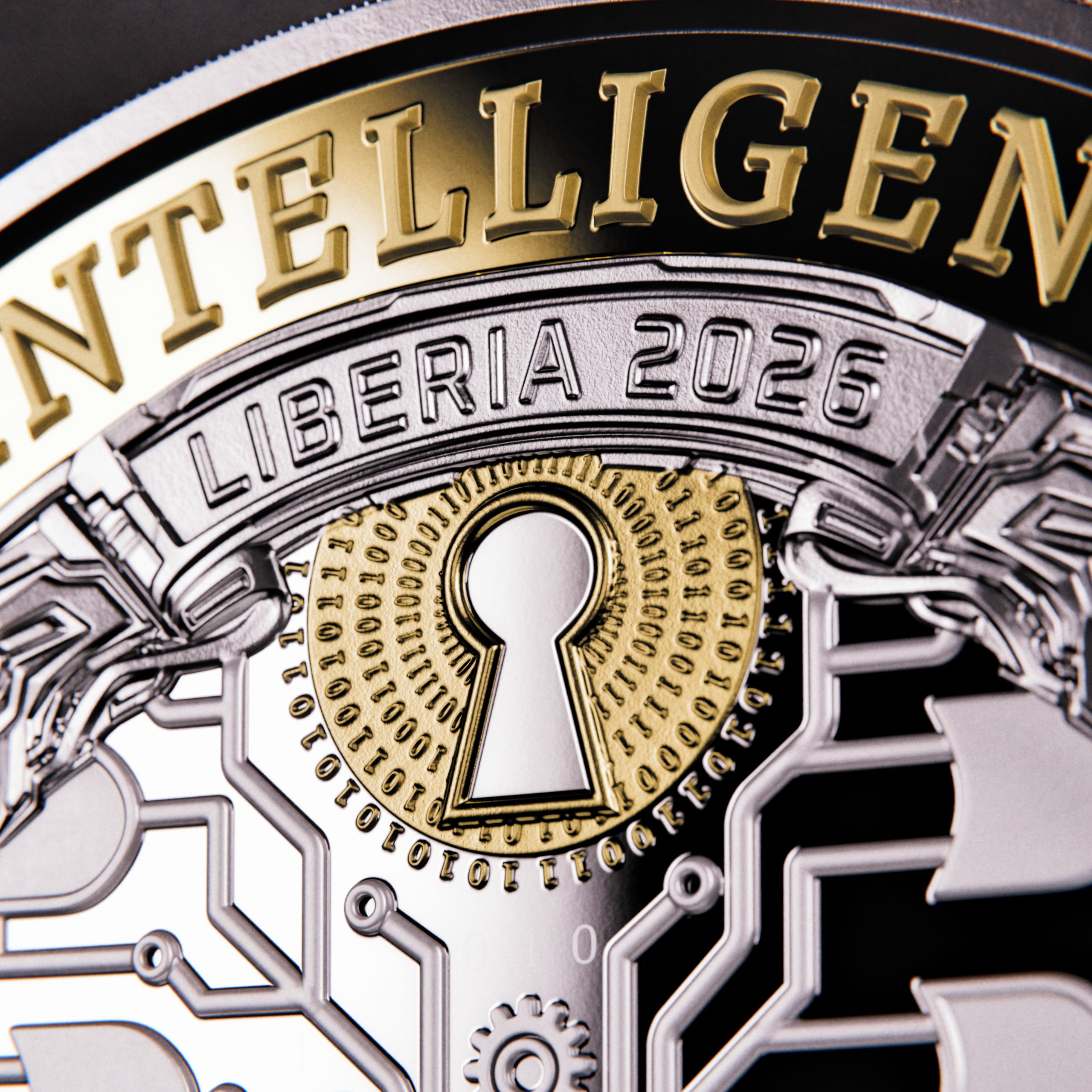
At the crown sits a keyhole. Binary code wraps around it in fine concentric rings, so the tree’s highest point is a lock waiting to be opened.
Above the keyhole, two mechanical wings hold the LIBERIA 2026 banner. Below the ribbon, roots spread through the metal and cradle the coat of arms of the Republic of Liberia.
Emerging Consciousness
A serene human profile faces right. Its skull is opened to reveal a mirror-polished brain, with the folds of the cerebrum, the cerebellum’s fine striations and the brainstem descending into the neck.
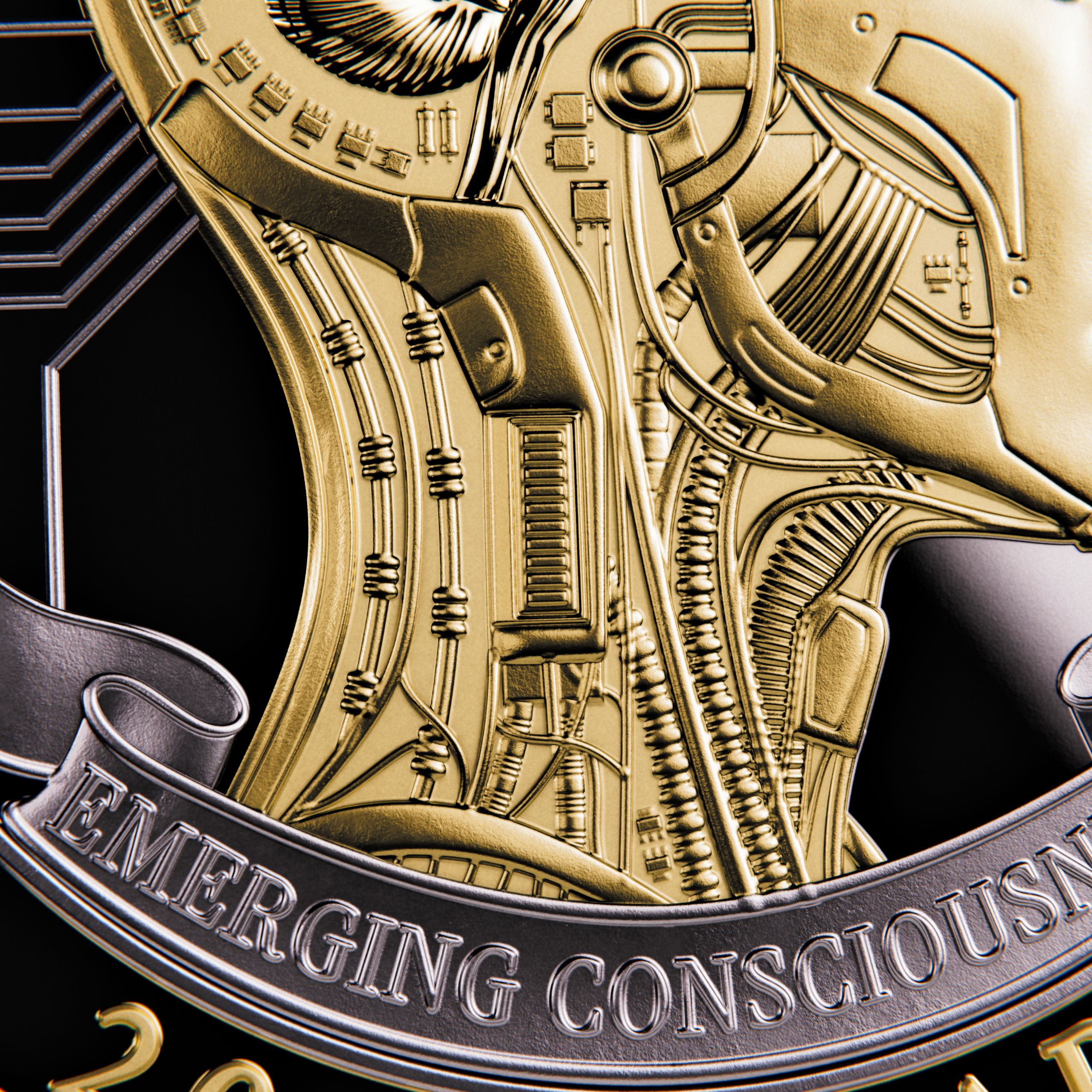
The outline of the skull is traced with miniature electronic components, and the circuitry continues downward. Cables bound in resistor bands run alongside a segmented spinal column, and muscle fibres blend into wiring at the jaw and throat. Circuit traces extend outward from behind the head into the field.
The face is calm and human. Everything beneath it is machine. The two parts are presented as one being.
Progress you can see in the metal
The series was built to document progress, and the 2026 design shows it in three ways:
- Scale of detail. Micro-components line the skull, binary code is legible in rings around the keyhole, and individual vertebrae and cerebellar folds are resolved.
- Depth. The relief is layered, and mirror and frost are placed deliberately so the brain and the keyhole catch light first.
- Concept. For the first time, the two sides carry a single argument. The obverse shows the architecture of thought. The reverse shows the being that thinks with it.
Three editions
Proof-like Silver. Struck in 1 oz of .9999 fine silver. Frosted relief stands against mirror fields, giving the polished brain and keyhole a near-liquid shine.
Proof-like Gold. The same design in .9999 fine gold, made for collectors who want the series in its most permanent form.
Selectively Gold-Plated Silver Proof. Full proof finish with gold applied to tell the story in two metals. On the reverse, the entire figure, from brain to spine, is in gold against a field of silver circuitry. On the obverse, gold marks the inscription ring, the keyhole of binary code and the coat of arms.

 United States (US) dollar ($)
 Euro (€)
 Pound sterling (£)
 Czech koruna (Kč)
 Hungarian forint (Ft)
 United Arab Emirates dirham (د.إ)